 Cagliari Boat Tours
Cagliari Cruise Passengers: Fitting a Boat Tour into a Port Day
Cagliari is one of the rare ports where the best half-day activity leaves from a quay you can walk to - which makes the Cagliari cruise port boat tour question genuinely answerable. This guide does the timing arithmetic against the boats in the full comparison of Cagliari boat trips, with the catalog's own formats sorted by how much of a port day each one eats.
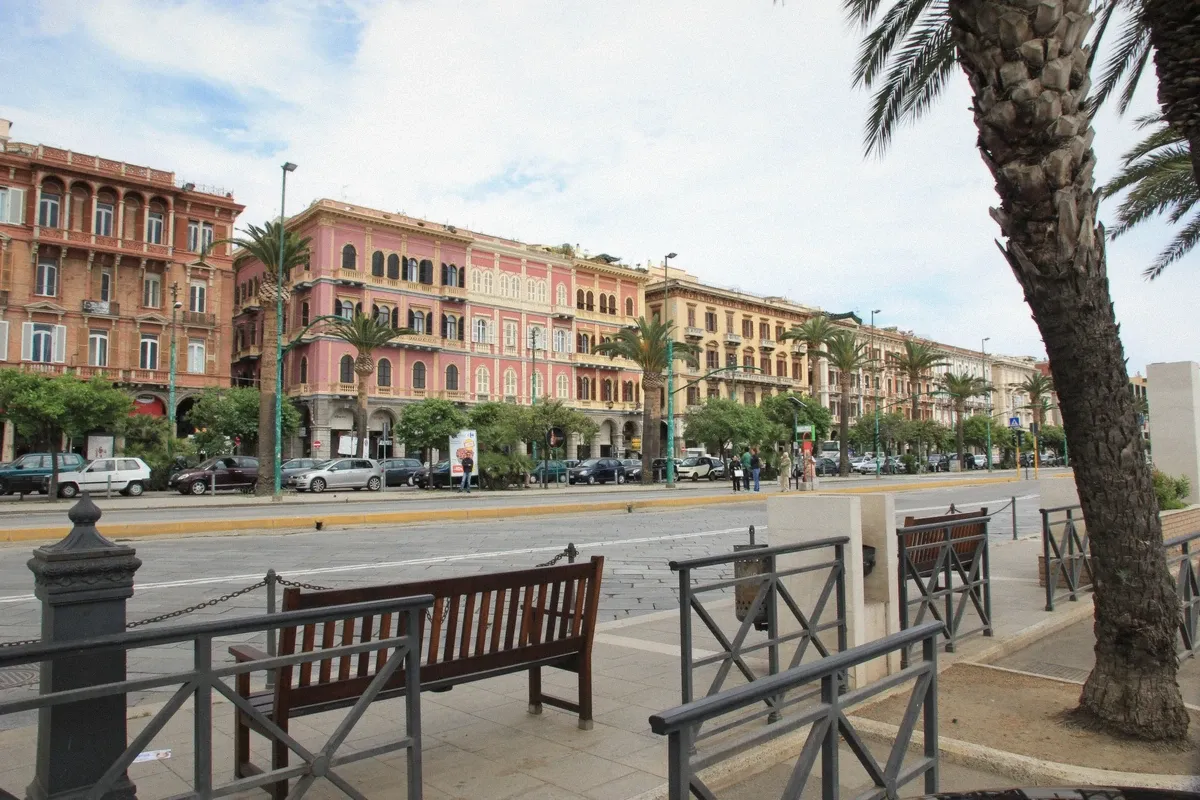
Via Roma above the harbour - the port-day street between the terminal and the quays. Photo: Gianni Careddu, CC BY-SA 4.0, via Wikimedia Commons.
Quick answer Which of the boats compared fits a tender window, how far each quay really is from the ship, and the two-hour fallback
Yes - a Cagliari port day fits a boat tour, and the city's geography is the reason: the cruise terminal sits beside the inner harbour, and Molo Dogana - the RIBs' check-in quay - is minutes away on foot. The formats that fit a tender window are the two- and three-hour runs: the 12-place caves boat is the tightest (two hours, Marina Piccola, the whole cave line), the flagship RIB the classic (three hours, four swim stops). Book a morning slot on a morning-in-port day, pad the return by an hour, and hold the booking with reserve-now-pay-later until the ship confirms. The fallback if the schedule wobbles: Castello above the terminal - the city's best half-day needs no boat at all.
Key takeaways
- Book the earliest slot that fits your all-aboard time minus two hours - every listing's check-in wants you 20 minutes early, and the quay table sorts the walks.
- Independent bookings carry free cancellation to 24 hours; ship excursions do not - which is why booking early in the voyage matters.
- The full-day yacht is the one format that does not fit a port day - it needs a stay, not a call.
- Independent bookings carry free cancellation to 24 hours; ship excursions do not - which is why booking early in the voyage matters.
How Far the Quays Are from the Ship
Cagliari's cruise terminal opens onto the inner harbour's working side, and the city stacks itself up behind it. The walks, from the terminal gates:
Molo Dogana, the inner harbour's fishing-quay corner, sits at the harbour's edge - the closest thing to a walk-from-the-ship departure point in any port we have compared. The RIB safaris and the full-day yacht check in here.
Su Siccu marina, the tourist harbour east of the port, is a 20-minute walk along the waterfront or a short bus - the sailing catamaran and the private gozzo leave from it.
Marina Piccola, under the headland's western side, needs a bus or a 25-minute walk past Calamosca - the price of the caves boat's five-minutes-to-the-caves position.
The Lungomare New York pontoon on Poetto is the farthest - a seafront bus ride - which makes the catamaran toast and the sunset run the formats for long calls, not tight ones.
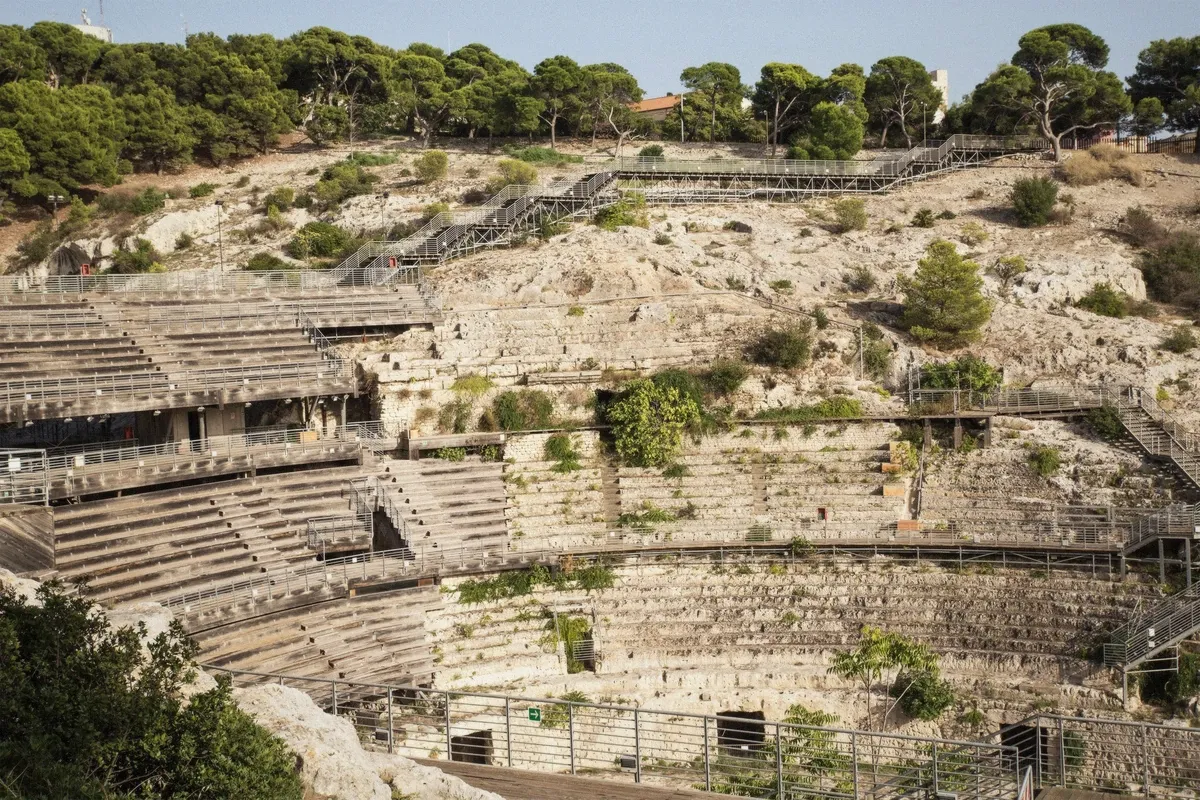
The fallback plan: the Roman amphitheatre, carved into the rock above the port quarter. Photo: Unukorno, CC BY 4.0, via Wikimedia Commons.
Timings That Fit a Tender Window
Work backwards from all-aboard. A realistic independent port day looks like this: ship's gangway at 8:00, at the quay with buffer by 8:45, two- or three-hour run from 9:00 or 10:00, landed by 13:00 at the latest, lunch in Castello, ship by 16:00 with an hour to spare. That arithmetic fits every format except the eight-hour yacht - which is the honest exception that proves the rule.
The two details that break port days are avoidable: the ID rule (the RIB and yacht check-ins enter documents into boat contracts - carry them ashore, not aboard in the cabin safe) and the slot mix-up (an afternoon booking on a ship that sails at five is a gamble the morning slot makes unnecessary). The 20-minutes-early check-in standard across the listings exists partly for exactly this traveller: the boat waits for no tender bus.
| Format | Duration | Quay from terminal | Fits a 9-to-5 call? |
|---|---|---|---|
| Caves boat | 2 h | Bus or 25-min walk | Yes - the tightest fit |
| Flagship RIB | 3 h | Minutes on foot | Yes, morning slot |
| Zodiac | 2 h | Short walk, assigned quay | Yes |
| Full-day yacht | 8 h | Minutes on foot | No - needs a stay |
Booking Independent vs Ship Excursion
The ship's excursion desk sells a version of the same day - usually a coach to a marina outside town and a bigger boat - at a margin, with one real advantage: the ship waits for its own excursion's bus, never for yours. Independent booking buys you the better boat (the comparison table is nine of them, reviewed), the smaller deck, and the free-cancellation-to-24-hours window that ship excursions do not offer.
The risk management that makes independent work: book early in the voyage (a cancelled port or a moved arrival still has room to rebook), choose morning slots, keep the reservation in reserve-now-pay-later mode until the itinerary is certain, and screenshot the confirmation for the walk. Thousands of passengers do this in Cagliari every summer - the quays are five minutes from the terminal gate, and the operators' morning rosters are built around the cruise calendar.
One more asymmetry worth naming: on the ship's excursion, a delayed tender eats the tour; independently, a missed departure is simply the cancellation policy doing what it exists for - which is why the buffer hour, not the boat choice, is the real decision.

The cathedral of Castello - the port day's plan B, ten minutes from the gangway. Photo: Holger Uwe Schmitt, CC BY-SA 4.0, via Wikimedia Commons.0, via Wikimedia Commons.
The Fallback Plan
Every port-day guide needs one, and Cagliari's is better than most: the Castello quarter begins at the terminal's back steps. The Bastione Saint Remy terrace, the cathedral, the towers, the view over the very gulf the boats sail - a self-guided two hours with no bookings, no tenders and no weather dependency. The Roman amphitheatre sits ten minutes below the quarter, carved into the rock that the city is built of.
And if the boat day worked perfectly and you landed early: the same geometry runs in reverse. Poetto's western lidos are a bus ride from the quays, the Marina Piccola beach road is the caves boat's front yard, and the Bastione's cafes pour aperitivi with the harbour in view. The port day's shape is yours once the boat has done its work.
A Port Day, Hour by Hour
The shape of a working independent boat day from the ship - built on a typical 8:00 arrival and 17:00 all-aboard, compressible to any shorter call.
-
08:00
Gangway down
Walk off with the first wave - Cagliari's terminal opens straight onto the harbour road, no tender shuttle on most calls. ID and booking reference in the day bag, not the cabin safe.
-
08:25
At the quay
Fifteen unhurried minutes to Molo Dogana along the harbour front, coffee in hand. The RIB crews are already signing contracts - yours takes two minutes with documents ready.
-
09:00
On the water
The three-hour run: four swim stops under the Sella del Diavolo, prosecco on the ride home, the city reading itself from the water. The gulf's best argument, compressed to a port day.
-
12:15
Landed and fed
Back at the quay with the whole afternoon standing. Walk fifteen minutes up into Castello; eat where the terraces face the harbour you just sailed.
-
14:00
The city's bonus round
The Bastione terraces, the cathedral, the towers - or the amphitheatre below. Two hours on foot covers the old town's spine without breaking a sweat.
-
16:00
Through the gate
Back through the terminal gate an hour before all-aboard, salt still on your arms, with the flagship's review you are about to write already drafting itself.
What the Ship Excursions Usually Sell
The excursion desk's boat product in Cagliari is real but different: a coach transfer to a marina outside the port, a larger shared deck - often forty-plus seats - and a route that trades the cave line for a longer swim-and-cruise format. It is a good day, and it is built for throughput: the timings revolve around the ship's tender schedule rather than the gulf's water clock, the deck is the big-boat social register, and the price carries the ship's margin on top of the operator's.
What it cannot sell is the geometry: no excursion leaves from a quay you can walk to, because Cagliari's in-city quays - Molo Dogana, Su Siccu - are exactly what the independent route exploits. Nor can it sell the format choice: the independent comparison table is nine decks from a two-hour zodiac to a private gozzo, with prices, caps and cancellation terms in columns; the excursion is one deck at one price. The honest rule: excursions suit travellers who want the ship to own the risk; independent bookings suit everyone else - and Cagliari, uniquely among the ports this network covers, makes the independent route the easy one.
Reading the Port Schedule Like a Local
The cruise calendar shapes Cagliari's quayside as much as the season does, and reading it costs one bookmark. Port call days - published by the port authority and mirrored on the municipality's tourism pages - bring the terminal's morning wave: the quay bars fill at eight, the RIB contracts stack at nine, and the old town's terraces earn their lunch rush. Independent travellers who know the call days book the first slots before the excursion coaches do; travellers who do not wonder where the quiet quay of yesterday went.
The pattern's shape: most calls run morning-arrival to early-evening departure, which is why the morning boat slots are the port day's currency and the afternoon quays empty so completely. Larger ships anchor two calls deep in high summer, and the second ship's passengers compound the 9 am rush at Molo Dogana - one more argument for the earliest departure your all-aboard allows.
And the local asymmetry worth exploiting: the operators' rosters bend toward the cruise calendar even on the formats the ships do not sell - the 12-place caves boat runs extra morning slots on big-call days, and the sunset crews plan their four-guest minimums around the departed crowds. Travellers staying in town should treat call days as the morning-busy, afternoon-quiet fact of Cagliari life - and take their own gulf at four in the afternoon, when the water is warm and the decks are theirs.
The Practical Edge: Luggage, Tenders and Timing
The details that separate a smooth port day from an anxious one are small, and they are all solved before the gangway. Luggage: carry the day bag, leave everything that cannot swim aboard in the cabin safe - the boat contracts want ID, the quays want nothing, and nothing the gulf offers rewards luggage. Tenders: most Cagliari calls dock, but anchored days shuttle by tender - add the shuttle's queue to your buffer hour and book nothing that cannot move. Timing: the marine forecast check the night before does double duty for port days, because a scirocco morning cancels the independent boat and the ship's excursion alike, and the 24-hour free-cancellation window is the only exit that refunds both.
Money and signal: the quays take cards but run on cash in season, the terminal's wi-fi ends at the gate, and the operators' confirmation messages carry the meeting pin - screenshot everything while the ship's signal holds. And the comfort line the_excited forget: seasickness tablets taken with breakfast, before the tender, not after the first swell.
What this buys: a port day that runs on its own momentum - gangway, quay, gulf, Castello, gate - with the fallback plan unused and the afternoon's only deadline the one the ship set. That is the whole trick, and it fits in a tote.
Two Port Days Compared: The Boat Morning and the City Day
Travellers with two Cagliari calls in one itinerary sometimes ask which day owes which plan, and the answer writes itself. The boat morning earns the first call: the gulf is the port's signature, the quays sit at the gangway's doorstep, and the swim stops run best on a fresh crew's early energy. The city day takes the second: Castello's quarter repays unhurried hours, the markets and the Bastione terraces carry a lunch that a boat schedule compresses, and the amphitheatre closes the afternoon at walking pace.
What the pairing solves is the energy curve every cruise week runs: two boat mornings back-to-back flatten a crew, and two city days waste the fleet at the gangway. Alternating them - gulf, city, gulf - keeps both formats at their best and makes the port's compact geography the week's advantage rather than its repetition.
For callers with a single day and a divided crew: split and rejoin. The boat runs 9 to 12 and lands ten minutes from the old town; the walkers take Castello at ten and meet the swimmers for lunch at one. The quay table is the rendezvous plan, and the whole maneuver fits inside the most tender-fragile schedule the lines run.
Booking Windows for Cruise Days: When the Lists Fill
The cruise calendar feeds the booking curve, and it runs predictably. Seats on the small formats - the 12-place caves boat above all - start filling the moment a large call appears on the port schedule, typically a fortnight out in summer and less in the shoulders. The RIBs' bigger rosters absorb the wave longer, but their first morning slots are the ones the excursion-avoiding regulars target, and those go first regardless of ship size.
The counter-cyclical play is the same one residents use: the slots after the ship sails. A 2 pm departure on a call day hands the afternoon's roster to the town, and the afternoon runs on big-call days sail half-full into the golden hours. Passengers on the ship cannot take them; travellers staying in town should.
And the waitlist truth for port-day travellers whose date shows full: cancellations cluster 48 to 24 hours out as itineraries firm up, the platforms re-release seats automatically, and the pay-later hold makes snapping one up a two-minute exercise. Port-day boating in Cagliari is rarely a sold-out story - it is a timing story, and the timing is knowable.
Questions from Cruise Passengers
Can cruise passengers do a boat tour in Cagliari?
Yes - and more easily than in most ports: the cruise terminal sits beside the inner harbour, the RIB quays are minutes away on foot, and the two- and three-hour formats fit a standard tender window with a buffer hour. Only the eight-hour full day needs an overnight stay.
How far is the Cagliari cruise port from the boat tours?
Molo Dogana - the two RIB safaris and the yacht - is the closest quay at the harbour's edge. Su Siccu marina is about 20 minutes on foot, Marina Piccola a bus ride or a 25-minute walk, and the Poetto pontoon the farthest by seafront bus. The quay section times each walk.
Is it safe to book independent tours in Cagliari?
With the standard precautions, yes: book morning slots early in the voyage, keep the booking in pay-later mode until the itinerary is confirmed, carry ID ashore for the boat contracts, and pad the return by an hour. Every listing carries free cancellation to 24 hours - the exit the ship excursions lack.
What can you do in Cagliari on a cruise day?
The two-answer version: a morning on the water - the caves boat is the tightest fit - or the on-foot city, which means Castello: the Saint Remy terrace, the cathedral, the towers and the amphitheatre, all within twenty minutes of the gangway.
Do Cagliari boat tours run for cruise ships?
The operators run their public rosters; cruise passengers book seats on them like anyone else. Morning departures align with typical port calls, and the morning slots are where the comparison table's best-reviewed boats do their fullest business.
What happens if the ship arrives late in Cagliari?
If you booked independently, the 24-hour free-cancellation window lets you move the booking once the delay is announced - rebook for the next call or take the refund. This is the strongest case for booking the first slots of your voyage's Cagliari day rather than the last.
Which quay is closest to the Cagliari cruise terminal?
Molo Dogana - the two RIB safaris and the full-day yacht check in at the inner harbour's edge, minutes on foot from the terminal gate. Su Siccu marina runs about twenty minutes on foot; Marina Piccola and the Poetto pontoon need a bus. The quay section times each walk.
Do Cagliari boat tours take luggage?
No - leave everything that is not swimming in the ship's cabin; the decks have no stowage for cases, and the day bag is the entire contract. The boats want swimmers, not luggage, and the port day's logistics stay at the terminal.
Is the water safe to swim in from the boats on a port day?
Yes - the same gulf the resident swimmers use, with deep-water entries off stable platforms and crews watching the stops. The swim stops are optional; a nervous swimmer rides as happily as they swim, and the gulf's clarity makes even the deck view worth the fare.